Article
‘Aligning’ the VAT law
Article
‘Aligning’ the VAT law
August 18, 2026
6 minute read
The Upper Tribunal decision was released on 7 July 2026 that clear aligners should be standard rated for VAT (and not exempt ‘dental prostheses’ as the First Tier Tribunal had found).
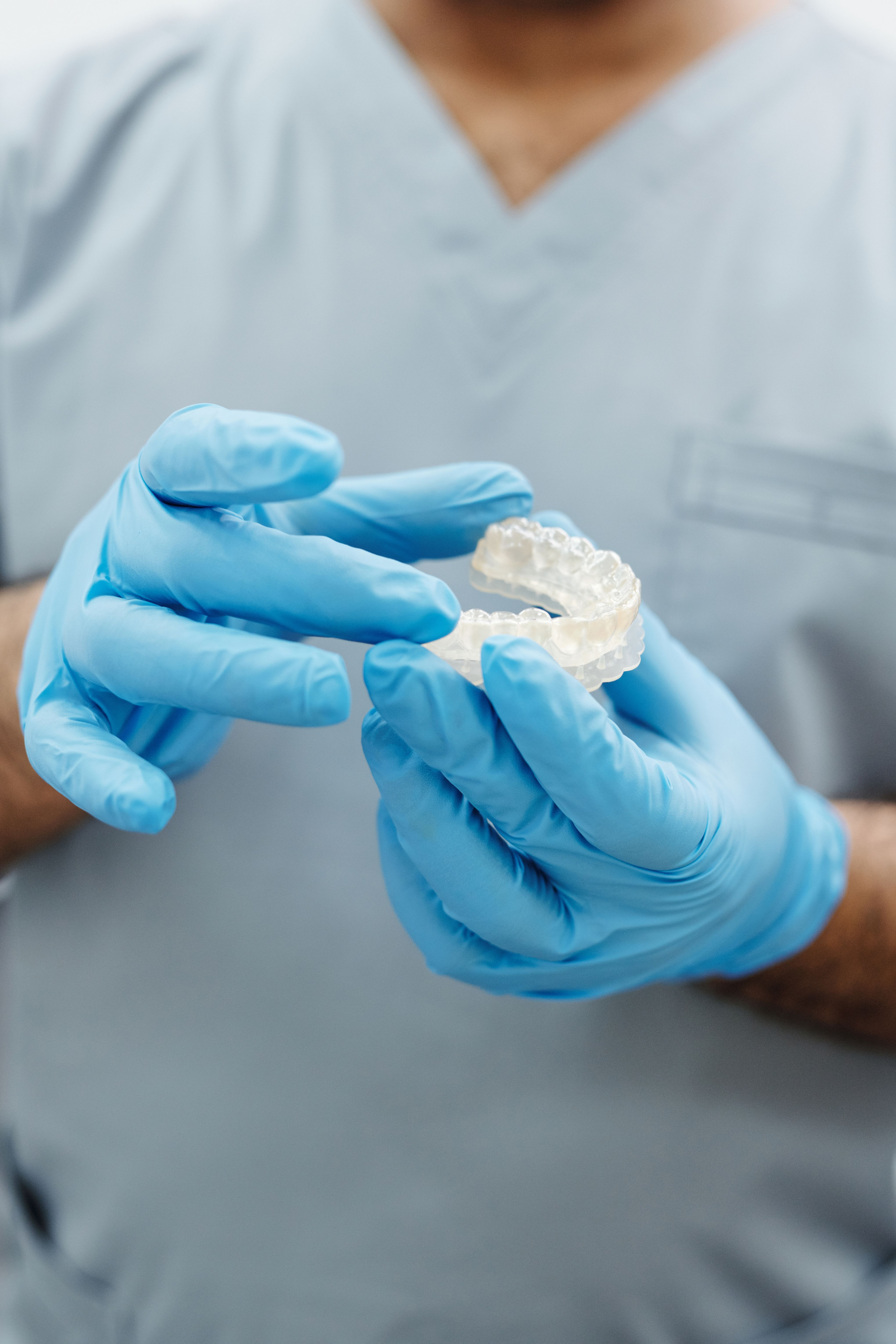
We have considered below the findings of the court, as well as the likely implications for both providers of aligners and dentists.
Background
Align Technology are best known for their ‘Invisalign’ product; they sell clear aligners to patients typically looking to straighten their teeth (as well as treat conditions such as misalignment, overbite, underbite, etc) by wearing a series of slightly different clear aligners. Dental professionals will scan a patient’s mouth and the scans will be used to create the aligners. The treatment plan is typically supported by regular trips to a dentist to check the progress.
The business had historically treated their supplies as VAT exempt supplies of dental prostheses. However, HMRC assessed them for under-reported output tax, stating that the supplies should have been subject to VAT. Align Technology has appealed this assessment (but has also been treating their supplies as standard-rated for VAT purposes since 2025, as a protective measure).
VAT legislation/technical guidance
Group 7 of Schedule 9 to VATA 1994 provides that the following are exempt from VAT:
‘Item no. 2. The supply of any services consisting in the provision of medical care, or the supply of dental prostheses, by:
(a) a person registered in the dentists’ register;
(b) a person registered in the dental care professionals register established under section 36B of the Dentists Act 1984;
Item no. 2A. The supply of any services or dental prostheses by a dental technician.’
First-tier Tribunal (‘FTT’) conclusion
The FTT concluded that ‘dental prostheses’ includes orthodontic appliances used to move a person’s teeth, that including the Aligners in the term ‘dental prostheses’ is consistent with the purpose of the Exemption and hence the supplies made by Align Technology were exempt.
Upper Tribunal conclusion
HMRC argued that a ‘prosthesis’ is an artificial replacement for part of the body and a ‘dental prosthesis’ is an artificial item used to replace missing or damaged teeth – the Aligners are orthodontic appliances used to reposition teeth and, accordingly, are not ‘dental prostheses’. This was based on the definition in ‘Black’s Medical Dictionary’ which states: ‘Dental prostheses are any artificial replacement of teeth. There are three main types: a crown, a bridge and a denture. …’
Opposingly, Align Technology argued that the Oxford Dictionary of Dentistry defines ‘dental prostheses’ as including ‘partial and complete dentures, bridges (fixed prostheses), and orthodontic appliances’ and that that the definition in the Oxford Concise Medical Dictionary includes any device ‘attached to the body as an aid’.
Various other definitions were also considered.
HMRC’s position, which the Upper Tribunal ultimately accepted, is that an aligner doesn’t replace anything. It moves teeth that are already there into a better position.
If the appliance’s job is to move, hold, guard, or protect, rather than replace what’s missing, this ruling suggests it’s standard rated. If its job is to physically stand in for a tooth or teeth that aren’t there, it stays exempt.
As such, the Upper Tribunal concluded that Align Technology’s supplies were taxable.
What next?
For Align Technology:
It remains to be seen if Align Technology will appeal. Our view is that this is highly likely, especially as there is sufficient uncertainty arising from the decision regarding:
- The definition of prostheses within the ordinary English language (i.e. which dictionary should we be looking at here(?!) and that the court is free to depart from a dictionary definition anyway)
- The fact that there is very little existing case law to help in defining the term ‘prostheses’
- The ‘purpose’ of the original legislation and whether this was intended to include such aligners (and thus how broadly the words in the actual exemption should be interpreted).
For suppliers/importers of aligners and retainers:
Where this is an Upper Tribunal decision, it is now legally binding on other taxpayers operating in a similar manner.
- Technically businesses operating in the same manner as Align Technology should update the VAT treatment of these and also make a retrospective adjustment/disclosure. Practically, to the extent that HMRC raises assessments in this regard, then we would recommend businesses appeal against these and stand them over the ultimate conclusion in this case law
- We recommend that businesses review their supplies and the potential financial impact that this decision may have, especially noting the partial exemption repercussions.
- Businesses may wish to update their terms and conditions and/or pricing to protect against the financial implications should additional output tax become payable to HMRC on their supplies and/or make a formal error correction to HMRC if their supplies are on all fours with the Align Technology case, to mitigate the risk of penalties or interest being applied in future.
There is also a question about the wider repercussions of this decision on other products. For example how does this impact nightguards, retainers, mouthguards, occlusal splints and similar? It is likely that similarities should be drawn between retainers and aligners, but the specific function of each item should be considered in more detail in order to conclude on the VAT liability of these.
For dentists:
Dentists providing Invisalign products to their patients should review their terms and conditions and marketing materials in this regard.
- Most likely, supplies by dentists will continue to fall within the scope of the exemption as a single supply of dental services, with the aligners forming an ancillary part of that supply
- As such, there would be no requirement for dentists to amend the VAT liability of supplies made by them and they could continue to treat these as exempt
- However, they would now face an additional irrecoverable VAT cost on the charge to them for the aligners. It is therefore important to check if the contract for the supply of those items to the dentist was inclusive or exclusive of VAT
- To the extent that dentists separately supply retainers/aligners/other items, which may now fall outside the scope of the VAT exemption, it would be important to consider whether this impacts their VAT registration obligation and if they are now obliged to charge output tax on these supplies. It may be possible to use ‘direct attribution’ such that input tax may then be recovered on the costs associated with these onward supplies
- If dentists import relevant standard rated ‘non-prostheses’ goods, then they are likely to suffer import VAT on these items. However, this would not, in itself, trigger a VAT registration obligation.
As a reminder, in all instances, it is important to consider your own specific fact pattern and the VAT implications for this. The above should not be taken as ‘VAT advice’.
Links
The full case decision may be found here:
Contacts
If you would like advice on your specific VAT position, please contact VAT@shawgibbs.com or Emma Coughlan (VAT Partner) on: emma.coughlan@shawgibbs.com
Author:

Emma Coughlan
Partner
Related content
Need expert advice?
Speak to an expert for advice on
+44-1865 292200 or get in touch online to find out how Shaw Gibbs can help you
Email
info@shawgibbs.com
Author:
Emma Coughlan
Partner
Need expert advice?
Speak to an expert for advice on
+44-1865 292200 or get in touch online to find out how Shaw Gibbs can help you
Email
info@shawgibbs.com